

Variscite – The Cousin of Turquoise
If you’ve ever admired a beautiful green turquoise stone, there’s a chance you were actually looking at variscite. These two gemstones can look so much alike that even experienced collectors sometimes have trouble telling them apart.
I like to call variscite “The Cousin of Turquoise.” They’re related in the mineral world, share many of the same beautiful colors, and both make wonderful gemstones for jewelry.
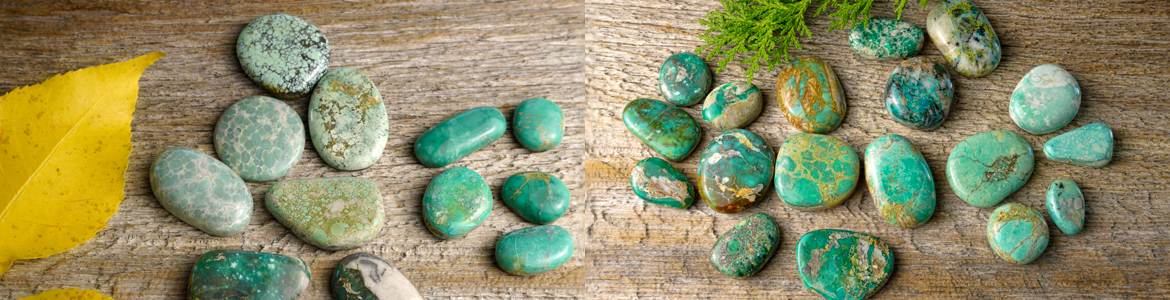
I’ve developed a particular fondness for variscite while exploring the Nevada desert in search of turquoise and other interesting stones. It’s become one of my favorite materials to collect, cut, and polish.
What Is Variscite?
Variscite is a naturally occurring mineral best known for its beautiful shades of green, ranging from soft mint and apple green to deep emerald, blue-green, and occasionally an almost turquoise blue.
Some stones are nearly solid green, while others contain intricate webs of brown, tan, cream, or black matrix. Occasionally, the patterns resemble little landscapes, with winding rivers, islands, and mountains.
Variscite has been forming naturally in the earth for millions of years. It was first identified in Germany in the 1800s and was named after Variscia, an old name for the region where it was discovered.
Today, variscite is found in several parts of the world, including Nevada, Utah, and Australia.
Variscite vs. Turquoise – What’s the Difference?
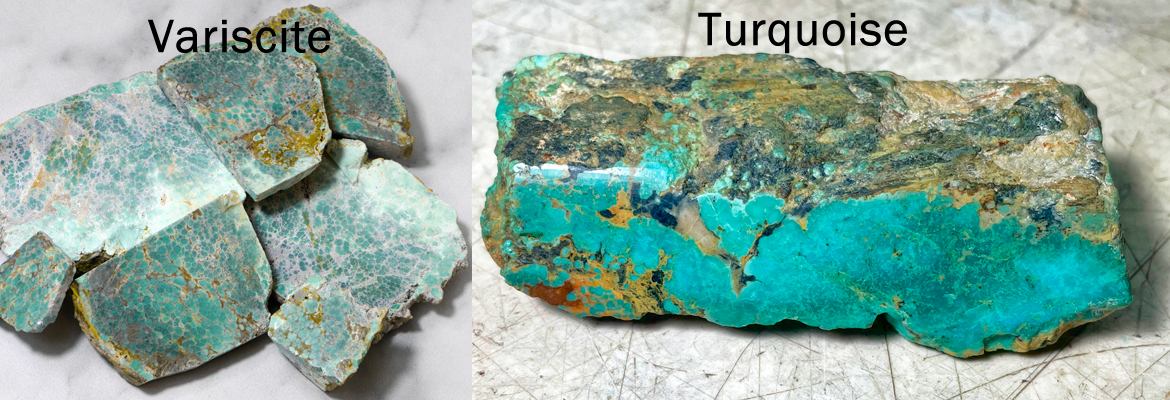
Variscite and turquoise are both phosphate minerals, but their mineral compositions are different. Turquoise contains copper, which contributes to its familiar blue coloring, while variscite does not contain copper as an essential ingredient.
Variscite is also generally softer than turquoise. On the Mohs hardness scale, variscite typically measures around 3.5 to 4.5, while turquoise usually measures around 5 to 6.
Although variscite is often greener and turquoise is frequently bluer, color alone isn’t always a reliable way to identify them. Both can have similar shades and matrix patterns, making mineral testing necessary in some cases to distinguish between the two.
Nevada Variscite – Treasures from the Desert
Nevada is famous for its turquoise, but the state also has some wonderful deposits of variscite. What’s particularly interesting is that variscite can sometimes be found right alongside turquoise.
Much of the variscite I work with comes from the Candelaria Hills of western Nevada, an area with a long history of mining and mineral exploration.
It’s rugged country, with rocky hills, old mining roads, and wide-open desert landscapes. It’s also the kind of place where I love spending time searching for interesting rocks.
What I find fascinating is how much variation can occur within a relatively small area. Two stones collected close together can look completely different once they’re cut and polished.
And sometimes, a rather ordinary-looking rock turns out to have something extraordinary hiding inside.
From Rough Variscite to Polished Gemstones
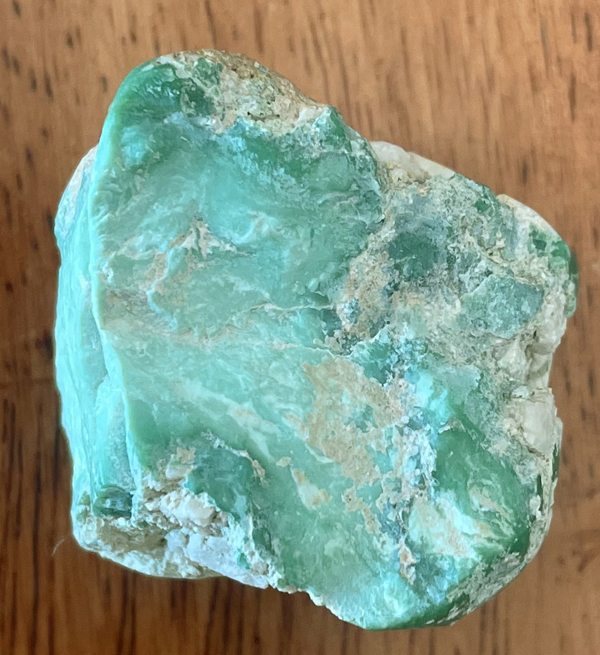 When I bring stones home from the desert, I examine them to decide which pieces might be suitable for cutting. Some have visible areas of beautiful color, while others offer only a hint of what might be inside.
Because variscite is relatively soft and some material can be porous or fragile, I find it important to stabilize my stones before cutting them into cabochons. Stabilization helps strengthen the material, making it easier to work with and more durable for jewelry.
Once the rough material is ready, I cut it into slabs to reveal the colors and patterns hidden inside. From there, I select the most interesting sections to shape and polish into cabochons.
I enjoy working with the natural patterns rather than trying to make every stone look alike. Sometimes the most interesting cabochon isn’t the one with the brightest color, but the one with the most unusual character.
Variscite Jewelry – A Beautiful Alternative to Turquoise
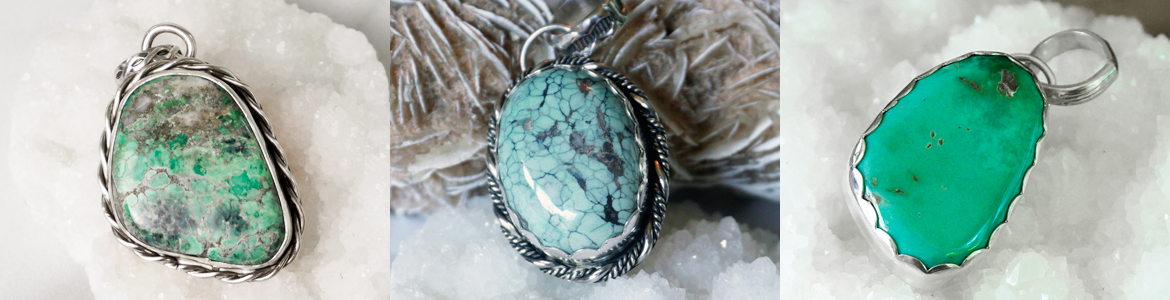
Although turquoise is much better known, variscite deserves a place of its own in the world of gemstone jewelry.
Its beautiful green and blue-green shades look especially attractive when paired with sterling silver. I especially enjoy creating handmade variscite jewelry because each stone has its own distinctive patterns, making every finished piece one of a kind.
Like turquoise, variscite should be treated with some care. Avoid harsh chemicals, ultrasonic cleaners, prolonged soaking, and hard knocks. A soft, slightly damp cloth is usually all that’s needed to clean a finished stone.
A Gemstone Worth Discovering
Variscite may not have the name recognition of turquoise, but I think that’s part of its appeal.
For me, there’s something special about knowing where a stone came from. I remember the desert hills where I collected it and the anticipation of seeing what appears when the saw makes that first cut.
That’s a connection you don’t get from simply buying a finished gemstone.
So the next time you see a beautiful green stone that looks like turquoise, take another look. You might just be admiring its lesser-known cousin, variscite.
And in my opinion, the cousin is every bit as beautiful.
If you’ve fallen in love with variscite as much as I have, I invite you to explore my collection of handmade variscite jewelry, featuring one-of-a-kind stones I’ve cut and polished myself.